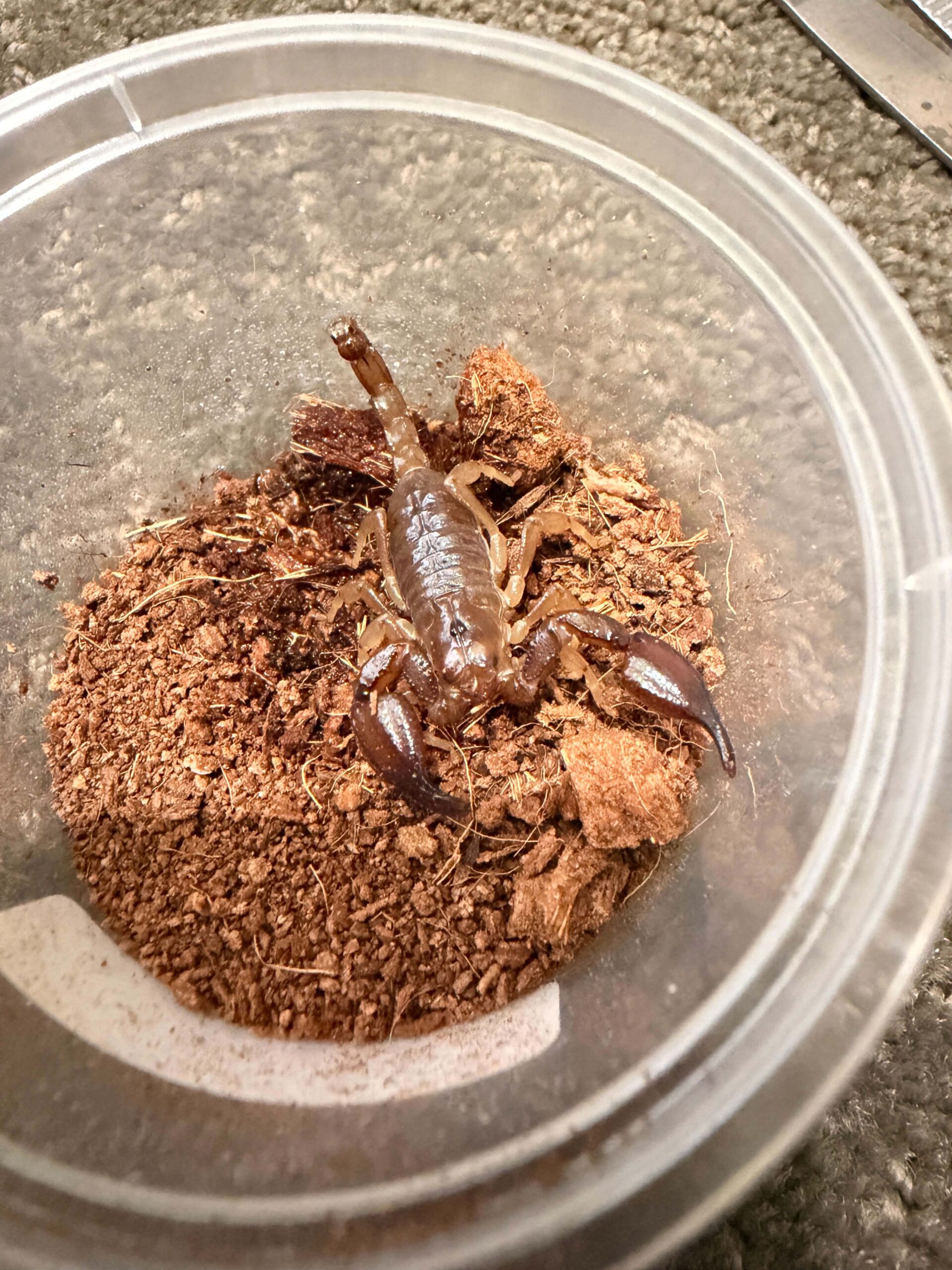
Black Rock Scorpion Urodacus Manicatus
The Black Rock Scorpion (Urodacus manicatus) is a robust Australian burrowing scorpion known for its dark, glossy appearance and powerful pincers. Native to southern regions of Australia, this species is commonly found in rocky habitats and dry woodlands, where it shelters beneath stones or within self-dug burrows.
Scientific Classification
Genus: Urodacus
Family: Urodacidae
Common name: Black Rock Scorpion
Appearance
- Medium to large-sized Australian scorpion
- Dark brown to black coloration with a slightly glossy finish
- Thick, powerful pincers (chelae) adapted for digging and gripping prey
- Sturdy, segmented body with a relatively short, curved tail
- Stinger capable of delivering a mild to moderate venom
Their strong exoskeleton and muscular build make them well-suited for a burrowing lifestyle.
Habitat & Distribution
Black Rock Scorpions are widely distributed across southern Australia, particularly in:
- Victoria
- South Australia
- Parts of New South Wales
They favour dry to semi-arid environments with suitable shelter, including:
- Beneath rocks and logs
- In soil burrows (often self-constructed)
- Dry forests and scrublands
They require areas with firm substrate for burrowing and moderate humidity levels.
Behaviour
Primarily nocturnal, Urodacus manicatus emerges at night to hunt and explore.
Diet includes:
- Insects
- Small arthropods
- Occasionally other invertebrates
They rely on their strong pincers to subdue prey, using their stinger when necessary.
When threatened, they adopt a defensive posture by raising their tail and pincers. While not aggressive, they will sting if provoked.
Invertebrate Keeping
The Black Rock Scorpion is a popular species among Australian invertebrate keepers due to its hardiness and fascinating behaviour. They require:
- A dry to slightly humid enclosure with good ventilation
- Deep substrate suitable for burrowing
- Hides such as rocks or bark
- A diet of live insects (e.g. crickets, roaches)
As a solitary and territorial species, they should be housed individually.
With proper care, Urodacus manicatus can thrive in captivity and make an impressive addition to any invertebrate collection.
