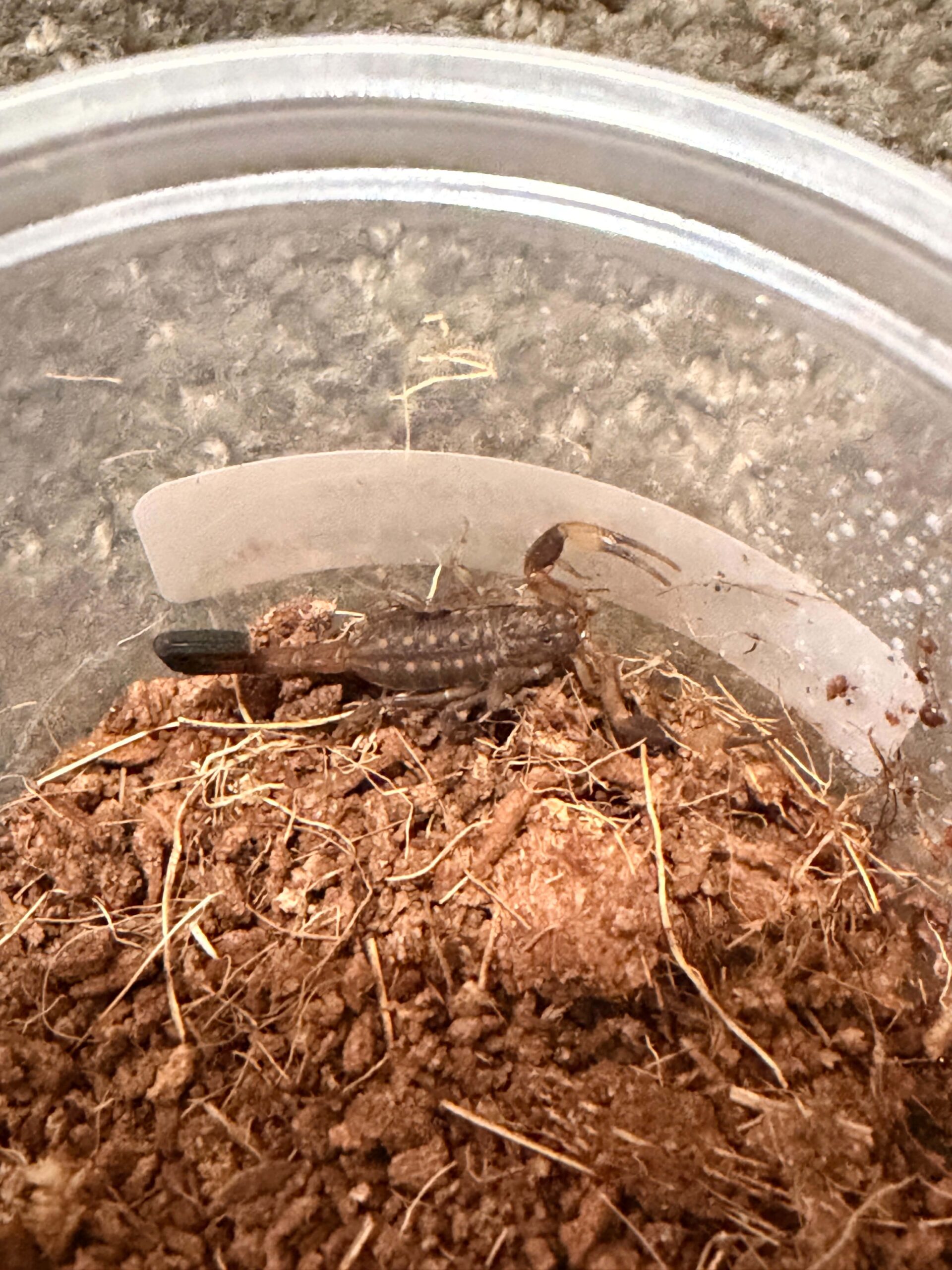
Black-Footed Bark Scorpion (Reddyanus melanodactylus)
The Black-Footed Bark Scorpion (Reddyanus melanodactylus) is a slender and fast-moving species known for its contrasting dark extremities and agile climbing ability. Native to parts of Asia, this bark-dwelling scorpion is well adapted to vertical environments, where it shelters under bark and within crevices.
Scientific Classification
Genus: Reddyanus
Family: Buthidae
Common name: Black-Footed Bark Scorpion
Appearance
- Small to medium-sized scorpion
- Light yellow to tan body with distinctly darker (often black) legs and pedipalps
- Slender pincers and elongated tail typical of bark scorpions
- Fine, smooth exoskeleton adapted for climbing
- Equipped with a relatively potent stinger compared to bulkier species
Their contrasting “black-footed” appearance gives them their common name and makes them visually distinctive.
Habitat & Distribution
Reddyanus melanodactylus occurs in parts of South and Southeast Asia, typically inhabiting:
- Forests and woodland regions
- Areas with abundant ծառ bark and natural crevices
- Human structures in some cases (under loose wood, debris, or walls)
They are most often found:
- Under tree bark
- Inside cracks and crevices
- In sheltered vertical microhabitats
They prefer warm temperatures and moderate humidity.
Behaviour
This species is nocturnal, highly alert, and quick-moving.
Diet includes:
- Small insects
- Other arthropods
As an ambush predator, it uses its speed and venom to quickly subdue prey.
When disturbed, it may:
- Flee rapidly
- Climb vertical surfaces with ease
- Adopt a defensive posture with its tail raised
Due to its agility and temperament, it is considered more reactive than many burrowing scorpions.
Invertebrate Keeping
The Black-Footed Bark Scorpion is suited to experienced keepers due to its speed and venom potency. Care requirements include:
- A vertically oriented enclosure with bark and climbing surfaces
- Secure lid to prevent escape
- Moderate humidity with good ventilation
- Hiding spots such as cork bark or crevices
- A diet of small live insects (crickets, roaches)
Handling is not recommended due to their defensive nature and medically significant sting.
With proper setup, Reddyanus melanodactylus can thrive and makes a fascinating display species for those interested in arboreal scorpions.
