Dusty Pillbugs
Dusty Pillbugs are a smaller variety of terrestrial isopod closely resembling the familiar Armadillidium vulgare. Known for their compact size, pillbug body shape and interesting defensive behaviour, they are an appealing addition to specialist isopod collections and bioactive enclosures.
Unlike insects, pillbugs are terrestrial crustaceans related to crabs and prawns. They play an important role in breaking down decaying organic matter, helping recycle nutrients within their environment. Their smaller size compared with standard Armadillidium vulgare makes them an interesting alternative for keepers looking for a more compact pillbug variety.
Scientific Classification
- Common name: Dusty Pillbugs
- Hobby name: Dusty Isopods
- Order: Isopoda
- Suborder: Oniscidea
- Family: Armadillidiidae
- Genus: Armadillidium
- Scientific name: Armadillidium sp. (exact identification not confirmed)
Appearance
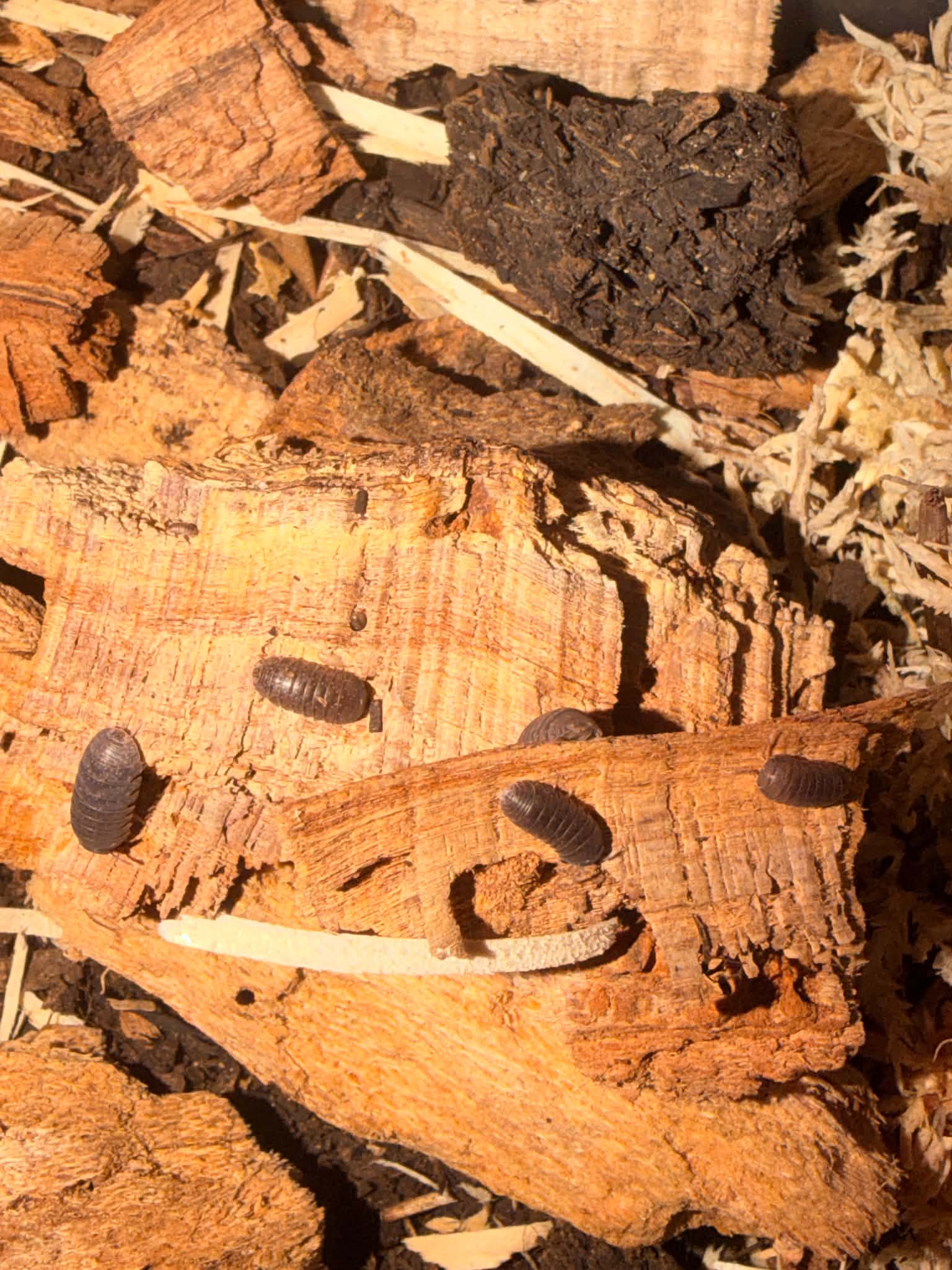
Dusty Pillbugs have a similar overall appearance to Armadillidium vulgare, featuring a rounded, segmented exoskeleton and the characteristic body shape associated with pillbugs.
Their main distinguishing feature is their smaller adult size compared with typical Armadillidium vulgare. Their compact build and dusty-looking appearance give them a distinctive presence within an isopod collection.
Like other pillbugs, they possess multiple pairs of legs, antennae and a protective segmented exoskeleton that allows them to curl into a tight ball when threatened.
Behaviour
Dusty Pillbugs are terrestrial isopods with fascinating defensive behaviour. Like other members of the Armadillidiidae family, they are capable of conglobation, meaning they can roll themselves into a protective ball when disturbed.
They spend much of their time exploring their enclosure, feeding on decaying organic matter and seeking shelter beneath leaf litter, bark and other hiding places.
Their smaller size makes them an interesting species to observe, particularly when kept in a well-established colony.
Care Requirements
Dusty Pillbugs require a well-ventilated enclosure with suitable humidity and access to both moist and relatively dry areas.
A suitable setup should include:
- A secure, well-ventilated container
- Moisture-retaining substrate containing organic material
- A consistent supply of leaf litter
- Cork bark and other suitable hiding places
- A moisture gradient with one side kept damper than the other
- A calcium source to support healthy exoskeleton development
Avoid excessive moisture, waterlogged substrate and high temperatures. Maintaining good ventilation and a suitable moisture gradient will help support a healthy colony.
Feeding
Dusty Pillbugs primarily feed on decaying plant material and leaf litter, helping break down organic matter within their enclosure.
Additional foods may include:
- Pesticide-free leaf litter
- Decaying hardwood
- Small amounts of vegetables
- Commercial isopod food
- Occasional protein supplements
Provide a consistent supply of leaf litter and remove uneaten fresh food before it spoils. Calcium should also be available to support healthy growth and exoskeleton development.
Breeding and Growth
Dusty Pillbugs reproduce sexually, with females carrying developing young in a specialised brood pouch known as a marsupium.
Young isopods emerge as miniature versions of the adults and gradually increase in size through successive moults.
Providing stable humidity, appropriate temperatures, sufficient food and plenty of hiding places can help encourage successful breeding and colony establishment.
Why Keep Dusty Pillbugs?
Dusty Pillbugs are an excellent option for collectors who enjoy Armadillidium species but are looking for a smaller alternative to the commonly kept Armadillidium vulgare.
Their compact size, familiar pillbug appearance and ability to curl into a protective ball make them an interesting addition to terrestrial isopod collections.
Whether you are an experienced isopod keeper or looking to expand your collection with a smaller pillbug variety, Dusty Pillbugs are a rewarding terrestrial crustacean to keep and observe.