Porcellio Scaber (Orange Embers)
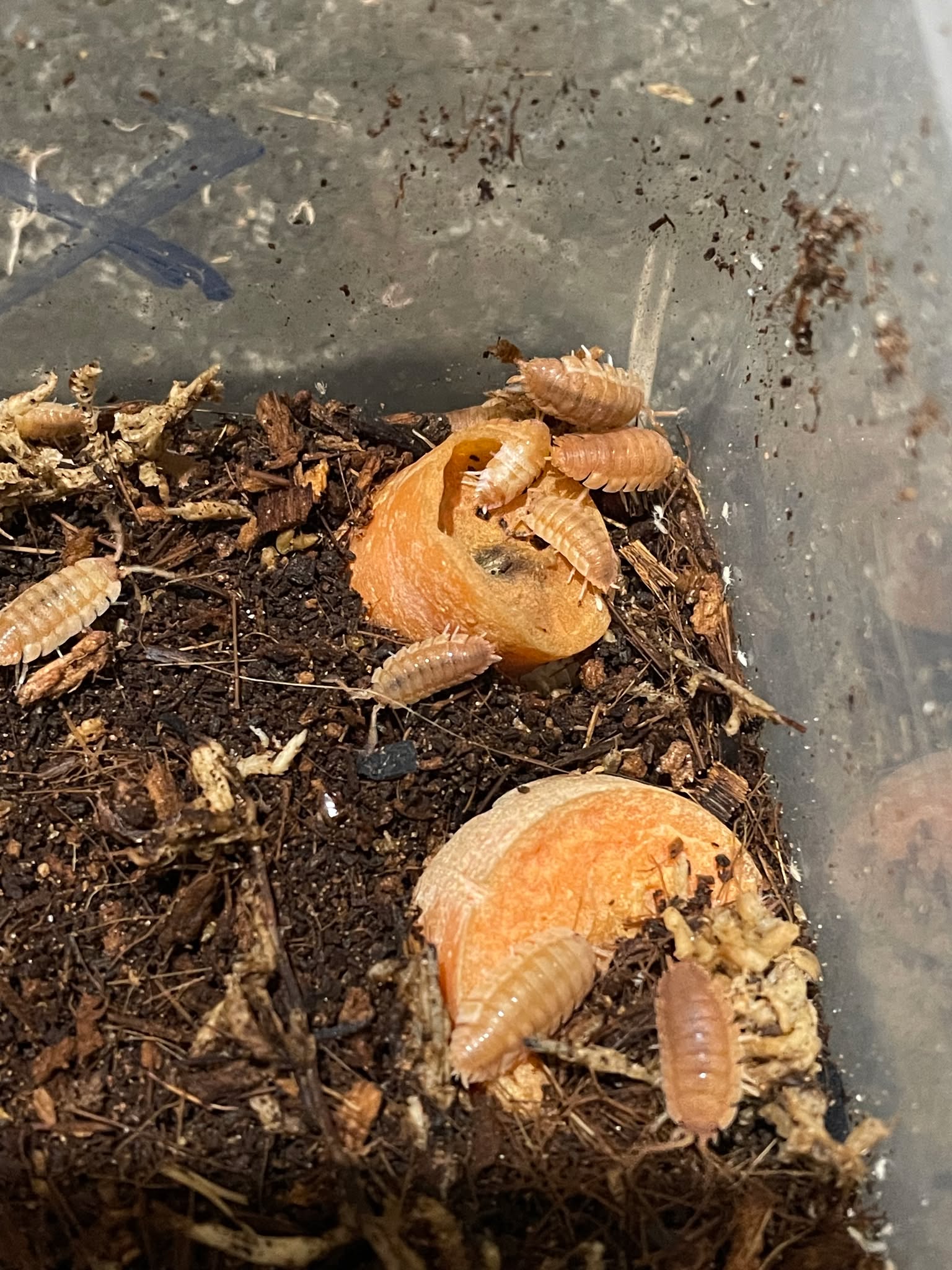
Orange Embers Isopods (Porcellio scaber “Orange Embers”) are a vibrant colour morph of the common rough woodlouse, selectively bred for their striking orange and ember-like colouration. Combining the hardiness and adaptability of Porcellio scaber with bold, fiery colours, Orange Embers are an excellent choice for isopod enthusiasts, bioactive keepers and anyone looking for a visually distinctive terrestrial isopod.
Their bright orange to deep ember-red tones contrast beautifully against dark substrate, leaf litter and naturalistic enclosure décor. With their active behaviour, strong appetite and breeding potential, Orange Embers Isopods can establish impressive colonies when provided with suitable care.
Scientific Classification
- Scientific Name: Porcellio scaber
- Genus: Porcellio
- Family: Porcellionidae
- Common Name: Orange Embers Isopod
- Morph: “Orange Embers”
- Type: Terrestrial Isopod
Appearance
Orange Embers are a medium-sized terrestrial isopod with the characteristic elongated body and textured exoskeleton associated with Porcellio scaber.
Their colouration can include:
- Bright orange tones
- Deep orange and ember-red shades
- Darker mottling
- Contrasting patches across the body
- Textured, slightly rough exoskeleton
- Elongated body shape
Unlike pill bugs, Porcellio scaber does not roll into a tight defensive ball. Their elongated body and active nature give them a distinctive appearance compared with rounded isopod species.
Natural Background
Porcellio scaber is a widespread species originally associated with Europe and is now established in many regions around the world.
The species is commonly encountered in habitats containing moisture and decomposing organic material, including:
- Gardens
- Woodland leaf litter
- Compost
- Beneath logs
- Under stones
- Decaying vegetation
The Orange Embers variety is a selectively bred colour morph developed within the captive invertebrate hobby, making its vivid colouration particularly desirable among isopod collectors.
Behaviour
Orange Embers are active, fast-moving and primarily nocturnal. They often remain concealed beneath bark, leaf litter and other cover during the day before becoming more active when conditions are darker.
As detritivores, they feed on decomposing organic material such as:
- Decaying leaves
- Rotting wood
- Vegetable matter
- Dead plant material
- Other organic debris
When disturbed, they generally rely on movement and hiding rather than conglobation for protection.
Orange Embers Isopod Care
One of the major advantages of Porcellio scaber is its hardy and adaptable nature. Orange Embers can be successfully maintained by both newer and experienced isopod keepers when their basic environmental requirements are met.
A suitable enclosure should include:
- A moisture gradient
- A humid area and a drier area
- Good ventilation
- Plenty of dried leaf litter
- Decaying hardwood
- Cork bark and natural hides
- Organic-rich substrate
- A reliable calcium source
Maintaining a moisture gradient allows the colony to move between areas with different humidity levels.
Avoid keeping the entire enclosure excessively wet, as good ventilation and access to drier areas are important.
Feeding
A plentiful supply of dried leaf litter and decaying hardwood should form the foundation of an Orange Embers colony’s diet.
Additional foods can be provided periodically, including:
- Specialist isopod diets
- Vegetables
- Suitable protein sources
- Other appropriate organic foods
Calcium should also be continuously available to support healthy exoskeleton development and moulting.
Bioactive Cleanup Crew
Orange Embers Isopods make an excellent bioactive cleanup crew. Their natural detritivore behaviour allows them to process decomposing organic material within naturalistic enclosures.
They help break down:
- Fallen leaves
- Dead plant material
- Decaying wood
- Organic debris
This makes them both a visually appealing and functional addition to bioactive terrariums and naturalistic vivariums.
Breeding & Colony Growth
Porcellio scaber is well known for its ability to reproduce successfully in suitable captive environments. With consistent conditions, adequate food and plenty of shelter, Orange Embers can establish healthy and productive colonies.
Providing abundant leaf litter, decaying wood, calcium and an appropriate moisture gradient creates a suitable environment for continued colony development.
Their breeding potential makes Orange Embers particularly appealing to keepers who enjoy watching an isopod colony grow over time.
Why Keep Orange Embers Isopods?
Orange Embers Isopods (Porcellio scaber “Orange Embers”) are an excellent choice for anyone looking for a colourful, hardy and active terrestrial isopod.
Key features:
- Vibrant orange and ember-red colouration
- Distinctive selectively bred colour morph
- Hardy and adaptable species
- Active detritivore
- Excellent bioactive cleanup crew
- Suitable for naturalistic terrariums
- Strong breeding potential
- Active and interesting nocturnal behaviour
- Easy to observe and maintain
- Attractive addition to specialist isopod collections
With their fiery orange colouration, active behaviour and hardy nature, Orange Embers Isopods (Porcellio scaber) are a fantastic choice for bioactive enclosures, terrestrial isopod collections and keepers looking to add a vibrant splash of colour to their naturalistic setup.