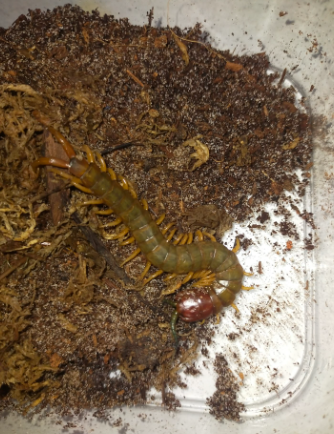
Cormocephalus “Bundaberg” (color may not exactly same as picture)
Cormocephalus “Bundaberg” is a locality-labelled centipede form prized by specialist invertebrate keepers for its distinctive appearance and active predatory behaviour. Associated with the Bundaberg region of Queensland, this centipede is an interesting addition to a collection focused on Australian myriapods and regional colour forms.
Members of the genus Cormocephalus are ground-dwelling predators with elongated, segmented bodies, numerous legs and powerful venom-delivering appendages. The “Bundaberg” designation is used as a locality or hobby name, rather than a confirmed formal species name, so the exact identification and appearance should be verified against the specimen’s source information.
Scientific Classification
- Scientific name: Cormocephalus sp. “Bundaberg”
- Common name: Bundaberg Centipede
- Family: Scolopendridae
- Order: Scolopendromorpha
- Class: Chilopoda
- Type: Terrestrial centipede
Appearance
The Bundaberg form has the characteristic long, segmented body and numerous pairs of legs associated with Cormocephalus centipedes. Individual colouration may include contrasting body segments and coloured legs, although exact colours and patterns should not be assumed without confirmed information about the particular locality form.
Its antennae help it navigate its surroundings and locate prey, while its modified front legs, known as forcipules, are used to subdue prey by delivering venom.
Habitat and Natural Behaviour
C orm ocephalus centipedes are terrestrial animals that commonly shelter beneath rocks, fallen timber, bark and leaf litter. These protected spaces provide cover during the day and opportunities to hunt when conditions are suitable.
The Bundaberg label suggests a geographic association with Queensland, but its precise natural distribution and species identity should not be treated as confirmed without reliable locality records.
Like other scolopendrid centipedes, it is a carnivorous predator that may hunt insects and other small invertebrates. It can move quickly and may defend itself if threatened, making it best suited to observation rather than handling.
Care Requirements
The Cormocephalus “Bundaberg” requires a secure terrestrial enclosure with appropriate substrate, shelter and a suitable moisture gradient.
A suitable setup should include:
- A tightly secured, escape-proof enclosure
- Moisture-retaining substrate deep enough to allow retreat-building
- Cork bark, leaf litter or other suitable hiding places
- A moist area and a comparatively drier area
- Good ventilation without allowing the enclosure to dry out completely
- Stable temperatures suited to the animal’s confirmed species and source locality
Avoid waterlogged substrate, excessive heat and unnecessary disturbance. Always check the enclosure for gaps before leaving it unattended.
Feeding
This centipede is a carnivore and can be offered appropriately sized feeder insects, such as crickets and cockroaches.
Adjust feeding frequency to the individual’s size, body condition and appetite. Remove uneaten prey promptly, especially if the centipede is showing signs of preparing to moult.
Moulting and Growth
Centipedes grow by periodically shedding their exoskeleton. Before moulting, an individual may stop feeding, become less active or remain hidden for an extended period.
Avoid disturbing the centipede during this time and do not leave live feeder insects in the enclosure while it is vulnerable. Exact adult size, growth rate and lifespan depend on the species and individual, and should not be assumed from the locality name alone.
Handling and Safety
Direct handling is not recommended. Centipedes in this group are fast-moving predators capable of delivering a painful bite. Their venom can cause significant pain and swelling.
Use a secure enclosure and plan maintenance carefully to minimise the risk of escape or accidental contact. This form is best suited to keepers experienced with predatory invertebrates.
Why Keep Cormocephalus “Bundaberg”?
The Cormocephalus “Bundaberg” is an appealing option for experienced keepers interested in Australian centipedes and locality-labelled invertebrate forms. Its predatory behaviour, distinctive body structure and terrestrial habits make it an engaging species to observe.
With secure housing, appropriate moisture management and careful feeding, it can be a rewarding addition to a specialist invertebrate collection.