Port Macquarie Funnel-web (Hadronyche macquariensis)
The Port Macquarie Funnel-web (Hadronyche macquariensis) is a highly venomous Australian funnel-web spider known for its glossy appearance and association with coastal regions of New South Wales. As a member of the Hadronyche genus, it shares many traits with other funnel-webs, including potent venom and a burrow-dwelling lifestyle.
Scientific Classification
Genus: Hadronyche
Family: Atracidae
Common name: Port Macquarie Funnel-web
Appearance
- Medium-sized funnel-web spider
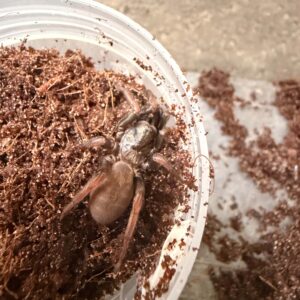
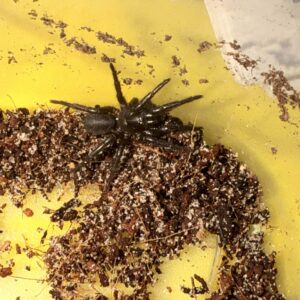
- Glossy dark brown to black carapace
- Strong, robust fangs capable of penetrating skin
- Moderately stocky build compared to more slender species
- Legs often slightly lighter in tone than the body
Its shiny, hardened cephalothorax is characteristic of funnel-web spiders.
Habitat & Distribution
Hadronyche macquariensis is found in coastal regions of New South Wales, particularly around:
- Port Macquarie and surrounding areas
It prefers moist, sheltered environments such as:
- Forest floors
- Under logs and rocks
- Garden environments with suitable humidity
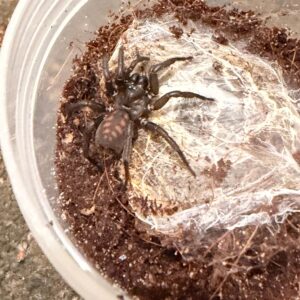
They construct silk-lined burrows with a funnel-shaped entrance and trip lines extending outward.
Behaviour
Primarily nocturnal, this species remains within its burrow during the day and emerges at night to hunt.
Diet includes:
- Insects
- Small invertebrates
They detect prey through vibrations along their trip lines and respond rapidly.
When threatened, they may display defensive behaviour, including:
- Raising front legs
- Exposing fangs
- Striking if provoked
Invertebrate Keeping
Due to its medically significant venom, the Port Macquarie Funnel-web is not recommended for private keepers and should only be maintained by licensed and experienced individuals.
Care requirements (for licensed handlers) include:
- Secure, escape-proof enclosure
- Deep, moist substrate for burrowing
- Stable humidity and temperature
- Strict safety protocols
Handling should never be attempted.
Despite the risks, Hadronyche macquariensis is an important species for venom research and plays a key role in its natural ecosystem.