Giant Pill Bugs (cf Spherillo sp)
The Giant Pill Bug (cf. Spherillo sp.) is a large and impressive Australian terrestrial isopod prized by keepers for its substantial size, smooth armoured body, and classic ability to curl into a perfect defensive sphere. Larger than many common backyard pill bugs, these fascinating native Australian isopods make an excellent addition to bioactive terrariums, naturalistic enclosures, and dedicated isopod collections.
Species within the Spherillo group are associated with moist, sheltered environments across Australia, where they contribute to the natural decomposition of organic matter. Their combination of size, hard armour, interesting behaviour, and relatively straightforward care makes the Giant Pill Bug an appealing choice for Australian isopod enthusiasts.
Scientific Classification
- Genus: Spherillo
- Family: Armadillidae
- Common Name: Giant Pill Bug
- Type: Australian terrestrial isopod
Appearance
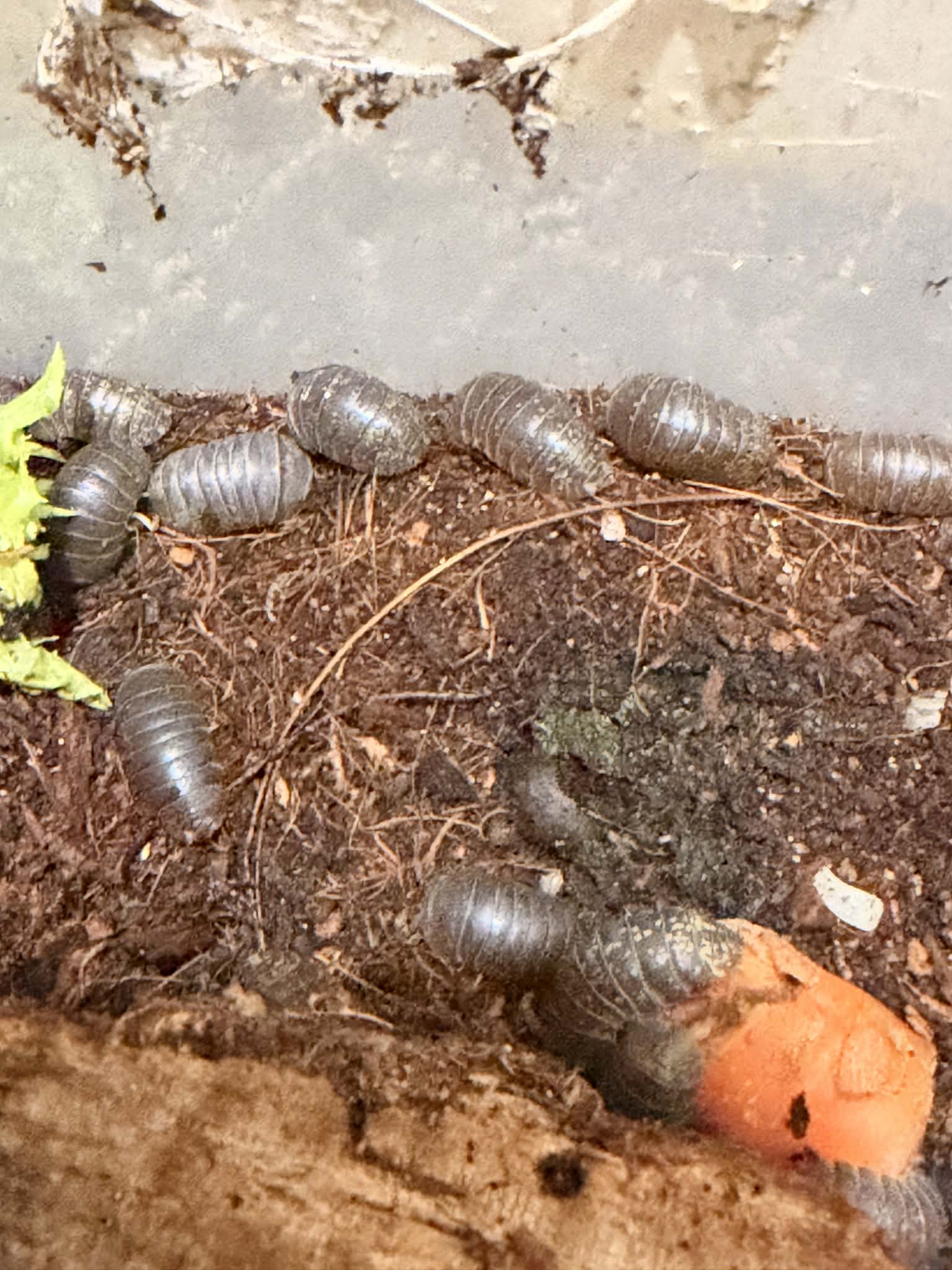
Giant Pill Bugs are noticeably larger and more robust than many of the pill bugs commonly encountered in Australian gardens. They have a smooth, rounded and heavily armoured body made up of overlapping segments.
Their appearance can vary from dark grey and charcoal through to brown, with some individuals displaying subtle mottling across the body.
Key features include:
- Large size compared with common pill bugs
- Smooth, rounded body
- Dark grey, charcoal or brown coloration
- Strong segmented exoskeleton
- Rounded body shape
- Ability to completely conglobate into a tight ball
When threatened, the Giant Pill Bug rolls itself into a compact sphere, using its hardened plates to protect its softer underside and legs.
Habitat & Distribution
The Giant Pill Bug is associated with moist, sheltered habitats in Australia, including coastal forests, woodlands, scrubland and garden environments.
They can commonly be found in areas containing plenty of organic material and natural cover, including:
- Leaf litter
- Beneath logs and fallen timber
- Under bark
- Around decaying organic matter
- Moist soil and sheltered woodland areas
In captivity, recreating these conditions with deep substrate, leaf litter, decaying wood and appropriate humidity helps encourage natural behaviour and successful colony establishment.
Behaviour
Giant Pill Bugs are primarily nocturnal, becoming most active after dark when they leave their shelters to search for food.
Like other terrestrial isopods, they are detritivores, feeding primarily on decomposing organic material such as:
- Decaying leaves
- Rotting wood
- Dead plant matter
- Fungi and other organic material
Their feeding activity makes them an important part of the natural decomposition process, helping recycle nutrients back into the soil.
One of their most recognisable behaviours is conglobation. When disturbed or threatened, the Giant Pill Bug curls its body tightly into a ball, creating a protective armoured shell around its vulnerable underside.
Giant Pill Bug Care
Giant Pill Bugs are well suited to bioactive terrariums and naturalistic isopod enclosures when provided with the correct environment.
A suitable Giant Pill Bug setup should include:
- A humid but well-ventilated enclosure
- Deep, moisture-retaining substrate
- Plenty of dried leaf litter
- Decaying hardwood or rotten wood
- Cork bark and other natural hides
- A reliable calcium source
- A moisture gradient within the enclosure
While humidity is important, the enclosure should not remain waterlogged. Good ventilation and a moisture gradient allow the isopods to move between more humid and drier areas according to their needs.
Feeding
Giant Pill Bugs primarily feed on naturally decomposing organic matter. A constant supply of high-quality leaf litter and decaying wood should form the foundation of their diet.
Additional foods can be offered occasionally, including suitable vegetables, fruits and specialised isopod foods. Calcium should also be readily available to support healthy exoskeleton development and moulting.
Bioactive Cleanup Crew
Giant Pill Bugs are an excellent choice for bioactive terrariums because they help break down dead plant material, leaf litter and other organic waste.
As part of a cleanup crew, they can contribute to a more natural ecosystem by:
- Consuming decomposing plant material
- Breaking down organic waste
- Recycling nutrients into the substrate
- Helping maintain naturalistic terrarium environments
Their larger size also makes them particularly interesting compared with smaller commonly available isopod species.
Breeding & Colony Growth
When provided with suitable humidity, food, shelter and calcium, Giant Pill Bugs can establish stable breeding colonies.
A mature colony benefits from plenty of hiding places and a deep layer of natural substrate containing leaf litter and decaying wood. Maintaining stable environmental conditions and avoiding excessive disturbance can encourage natural reproduction and colony growth.
Why Keep Giant Pill Bugs?
The Giant Pill Bug is an excellent choice for keepers looking for a large Australian terrestrial isopod with distinctive behaviour and impressive natural armour.
Key features:
- 🇦🇺 Native Australian isopod
- Large and robust compared with common pill bugs
- Smooth, heavily armoured appearance
- Classic ball-forming behaviour
- Excellent detritivore
- Suitable for bioactive terrariums
- Interesting addition to isopod collections
- Can establish breeding colonies under suitable conditions
The Giant Pill Bug (cf. Spherillo sp.) is a fascinating Australian isopod that combines impressive size, defensive conglobation, and useful cleanup-crew behaviour, making it a great addition to naturalistic enclosures and specialist terrestrial isopod collections.