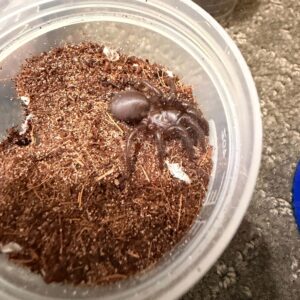
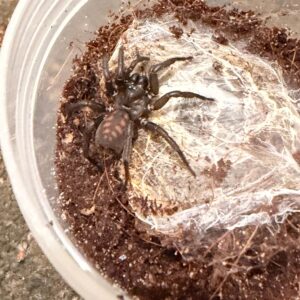
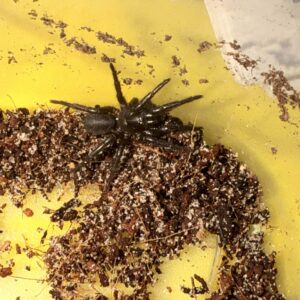
Micro Arboreal Brush Footed Trapdoor (Sason Colemani)
The Micro Arboreal Brush-Footed Trapdoor (Sason colemani) is a small and highly specialised Australian trapdoor spider known for its unique tree-dwelling lifestyle and delicate silk-built retreats. Unlike most trapdoor spiders that burrow underground, this species constructs camouflaged silk tubes on tree bark, making it a fascinating and unusual member of the trapdoor group.
Scientific Classification
Genus: Sason
Family: Barychelidae
Common name: Micro Arboreal Brush-Footed Trapdoor
Appearance
- Very small trapdoor spider species
- Compact, stocky body typical of mygalomorph spiders
- Colouration ranges from light brown to dark brown
- Fine hairs cover the body, aiding in sensory detection
- Possesses distinctive brush-like hairs on the feet, used for gripping surfaces
Their subtle colouring and small size allow them to blend seamlessly into tree bark and natural surroundings.
Habitat & Distribution
Sason colemani is found in parts of Australia, typically in:
- Forested and woodland environments
- Areas with suitable tree cover and bark texture
Unlike ground-dwelling relatives, they inhabit:
- Tree trunks
- Under loose bark
- Vertical surfaces where silk retreats can be constructed
They prefer stable humidity and sheltered microhabitats.
Behaviour
This species is primarily nocturnal and highly reclusive.
It constructs a silk tube retreat flush against tree bark, often with a small, well-camouflaged entrance rather than a traditional hinged “trapdoor.” From this retreat, the spider waits for passing prey.
Diet includes:
- Small insects
- Other tiny arthropods
They detect vibrations through their silk and rapidly ambush prey from the entrance of their retreat.
When disturbed, they retreat instantly into their silk tube, relying on camouflage and concealment rather than aggression.
Invertebrate Keeping
Due to its small size and specialised arboreal habits, Sason colemani is best suited for experienced keepers interested in unique species. They require:
- A vertical enclosure with bark or textured surfaces
- Moderate humidity with good airflow
- Fine substrate (optional, as they are primarily arboreal)
- Small live prey such as fruit flies or pinhead crickets
Providing suitable bark surfaces is essential, as they rely on these to construct their silk retreats.
While rarely seen due to their secretive nature, they offer a rewarding and highly interesting addition to specialised invertebrate collections.